The Hall of Fame
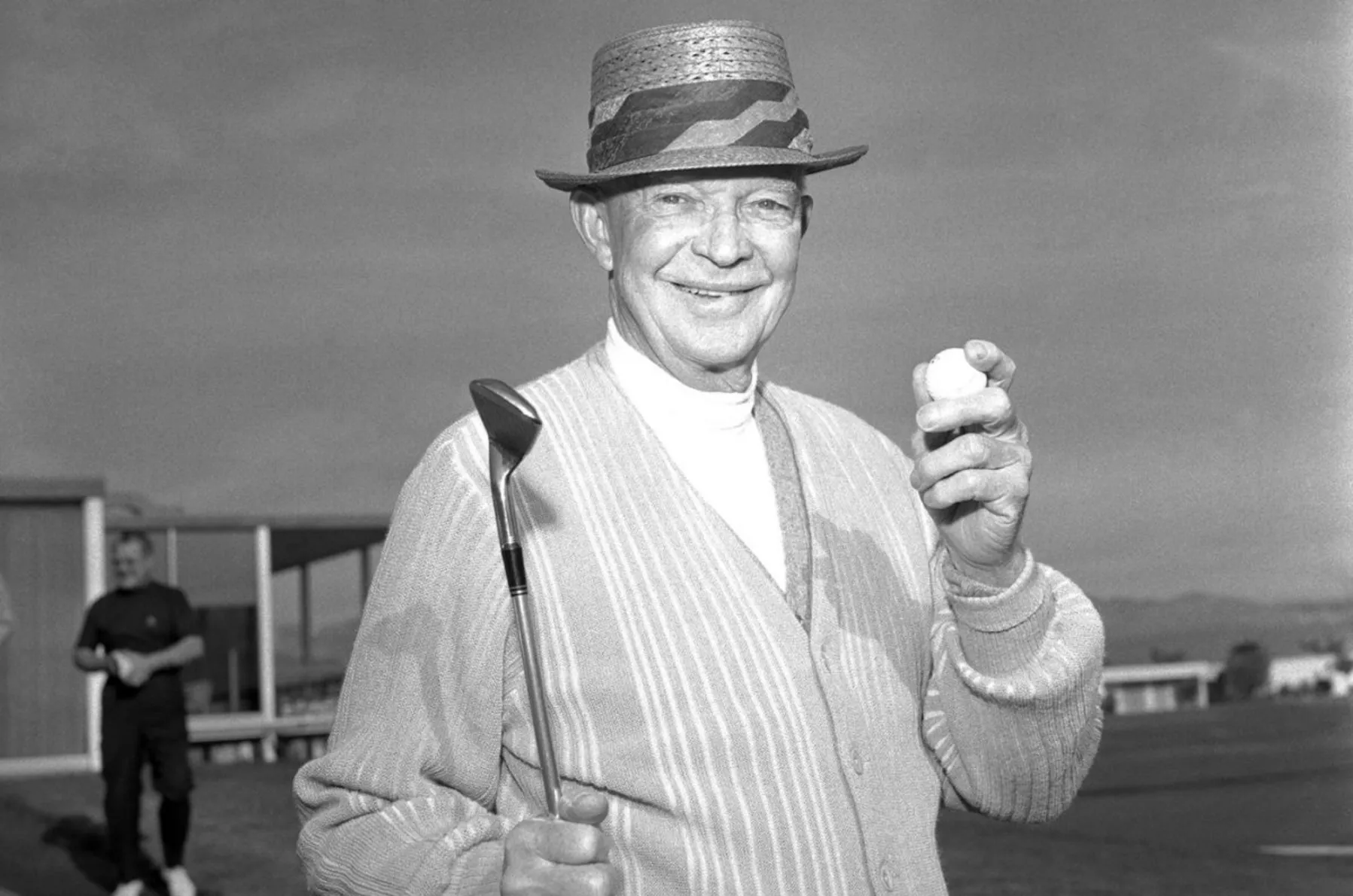
After Eisenhower left office in 1961, his clubs were eventually donated to the World Golf Hall of Fame in St. Augustine, Florida. The tape was still on the grips. Not a replica. Not a reproduction. The same GauzTex that a sitting president wrapped around his clubs in the White House — still holding, decades later.
Meanwhile, back in Chicago, General Bandages kept making the same tape. The formula didn't change because there was nothing to improve. Cotton gauze. Cohesive latex coating. Tears by hand. Sticks to itself, not to anything else. The engineering was done in 1935. Everything since then has been manufacturing.
"The product Eisenhower used is the same product available today. Same company. Same formula. We have never reformulated. We have never outsourced. Always made in the Chicagoland area — Chicago, Morton Grove, and now Elk Grove Village."
— General Bandages, Elk Grove Village, IL
The original GauzTex packaging — the tin and the label design from the 1930s — is preserved in the Smithsonian's National Museum of American History. Not for the tape itself, but for what it represents: an American product that solved a real problem, manufactured continuously in the same place for nine decades. The Smithsonian collects artifacts of industrial heritage. GauzTex qualified.