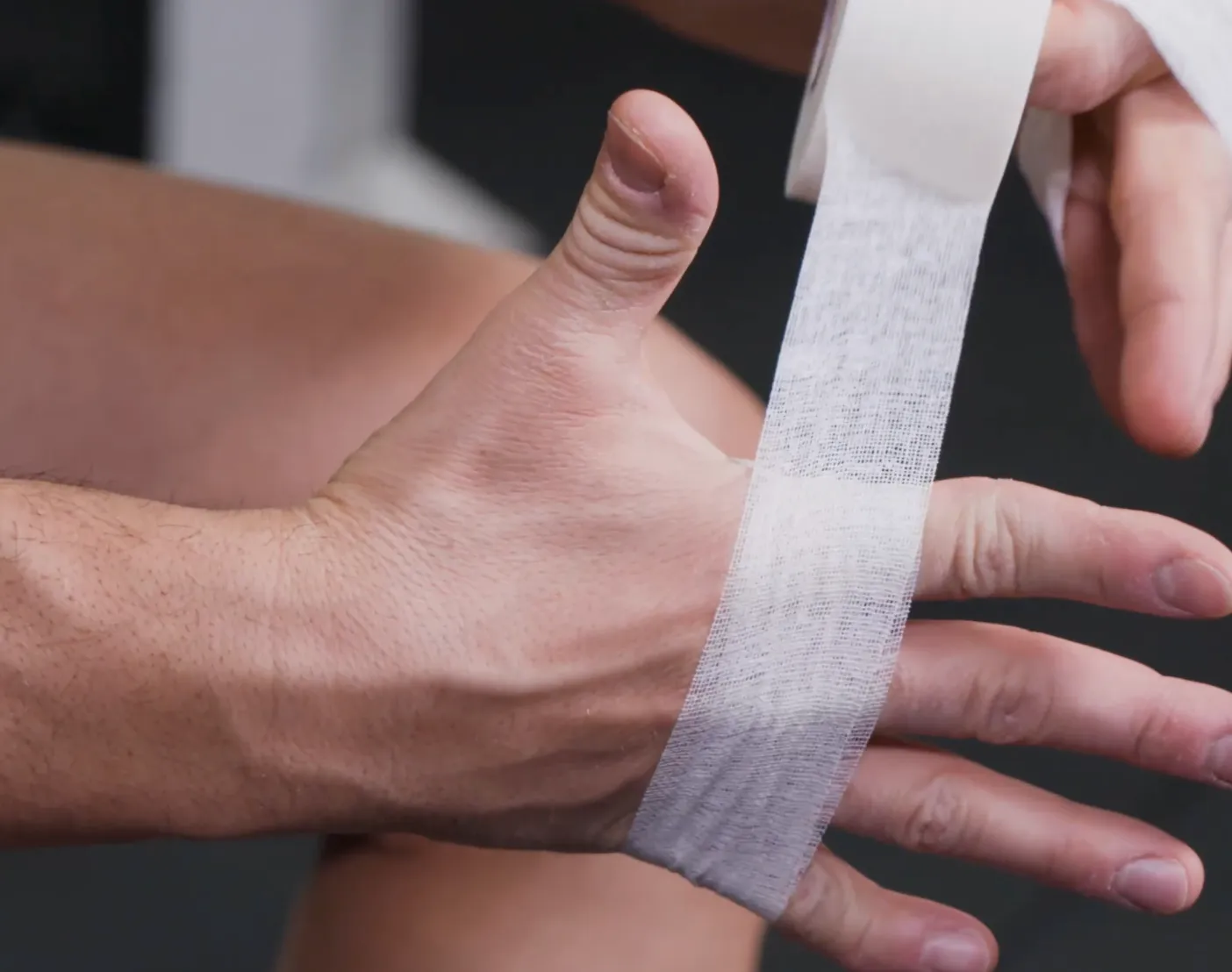
Three Zones
Heel. Toes. Ball. Same cotton tape.
Guard-Tex wraps all three primary foot blister zones with a single tape. Cotton manages the friction that creates blisters in each zone.
Foot Blister Prevention
Guard-Tex wraps the blister zones of your feet — heels, toes, and forefoot — with self-adhering cotton that absorbs shoe friction before it reaches skin. Zero adhesive means painless removal from existing blisters.
Every step creates friction between shoe and foot. At walking pace — 5,000 steps per day. Running — 10,000+ steps. Hiking with a pack — 15,000+ steps with extra load. The friction concentrates at three zones: the heel (shoe counter rubbing), the toes (toe box compression), and the ball of the foot (forefoot push-off). These three zones account for 90% of foot blisters.
Adhesive blister patches (hydrocolloid, moleskin, adhesive bandages) work for prevention but create a new problem when a blister forms underneath. The adhesive bonds to blister tissue, and removal reopens the wound. For multi-day activities like thru-hiking, backpacking, or military operations, daily tape changes on healing foot blisters become a painful ritual that delays recovery.
Thru-hiking the PCT — heel blisters by day 3. Guard-Tex for the remaining 2,600 miles. Daily tape changes that don't tear my blisters open. That saved my hike.— Thru-Hiker, Pacific Crest Trail
Guard-Tex wraps foot blister zones with cotton that absorbs shoe friction — preventing blisters on intact skin and protecting existing blisters without adhesive bonding to the wound. The tape fits inside any shoe, works with or without socks, and holds through the moisture and heat that feet generate during activity.
Three Zones
Guard-Tex wraps all three primary foot blister zones with a single tape. Cotton manages the friction that creates blisters in each zone.
Heel blisters. The shoe counter rubs the back of the heel on every stride. Guard-Tex wrapped around the heel provides a cotton friction barrier between counter and skin. Most effective blister zone to tape because heel blisters are the most debilitating.
Toe blisters — big toe and pinky. Toe box compression rubs the big toe laterally and the pinky medially. Guard-Tex on these toes blocks the rubbing. Also prevents between-toe blisters from toe-on-toe friction.
Ball of foot / forefoot. Push-off phase loads friction across the forefoot on every stride. Guard-Tex across the ball of the foot absorbs the push-off friction that creates forefoot blisters during running and hiking.
Existing foot blisters. Guard-Tex over an active blister cushions the wound against shoe contact. Zero adhesive means every tape change (daily on multi-day trips) leaves the healing surface undisturbed.
| Feature | Guard-Tex | Adhesive Tape | Bare Feet | Hydrocolloid Patches |
|---|---|---|---|---|
| Adhesive on foot blisters | ✓ Zero — ever | ✗ Bonds to wound | N/A | ✗ Adhesive on wound |
| In-shoe fit | ✓ Thin cotton — fits in any shoe | Moderate — adds some bulk | N/A | Adds bulk |
| Moisture performance | ✓ Cotton absorbs foot moisture | ✗ Many adhesives fail in sweat | N/A | Some are waterproof |
| Multi-day durability | ✓ Daily changes are painless | ✗ Each change damages blisters | N/A | ✗ Each change risks damage |
| Between-toe use | ✓ Wraps individual toes cleanly | ✗ Adhesive sticks toes together | N/A | Not designed for toes |
Wrap blister-prone zones on clean, dry feet. Heel: wrap around the back of the heel. Toes: individual toe wraps. Forefoot: wrap across the ball.
Pro tip: Apply over thin liner socks for additional friction management. Or apply directly to skin under any sock.Guard-Tex is thin enough to fit inside your normal footwear without changing shoe fit. No need to size up shoes to accommodate tape.
Pro tip: Smooth the tape flat — any wrinkles or bunches become new pressure points inside the shoe.Guard-Tex holds through the full activity. The cohesive bond holds despite foot moisture and the repetitive friction of thousands of steps.
Pro tip: For ultra-long activities (marathons, thru-hiking days), check tape at rest stops and add passes over worn areas.Peel off — zero pain, even on existing blisters. Apply treatment to clean wound surfaces. Re-tape in the morning.
Pro tip: On multi-day trips, daily painless tape changes make the difference between blisters that heal and blisters that worsen.
Try Guard-Tex
Self-adhering cotton gauze. No adhesive on skin. Zero residue. One roll lasts weeks. Made in Elk Grove Village, IL since 1935.
Shop Now"Thru-hiking the PCT — heel blisters by day 3. Guard-Tex for the remaining 2,600 miles. Daily tape changes that don't tear my blisters open. That saved my hike."— Thru-Hiker, Pacific Crest Trail
"Marathon training — forefoot blisters on long runs. Guard-Tex across the ball of my foot before every run over 10 miles. Blister-free through training and race day."— Marathon Runner
"Military rucking — foot blisters were an operational limitation. Guard-Tex on heels and toes for every ruck march. Fewer blisters, faster healing on the ones that form."— Infantry Soldier
"Hiking with new boots — breaking them in meant heel blisters. Guard-Tex until the boots broke in. No blisters, no break-in suffering."— Recreational Hiker
Self-adhering tape like Guard-Tex prevents foot blisters and protects existing ones without adhesive that tears healing tissue.
Wrap Guard-Tex around the back of the heel before putting on shoes. Cotton absorbs the shoe-counter friction that creates heel blisters.
Yes. Guard-Tex wraps individual toes cleanly without adhesive sticking toes together. Effective for big toe, pinky toe, and between-toe blister prevention.
Guard-Tex is thin enough for any footwear. No need to size up shoes to accommodate the tape.
Wrap known blister zones (heels, toes, forefoot) with Guard-Tex before runs. Cotton manages the repetitive shoe friction that causes blisters.
Yes. Guard-Tex holds through the moisture, heat, and thousands of steps that hiking generates. Daily tape changes on multi-day trips are painless.
3/4" for finger and toe blisters. 1-1/2" for heel and palm blisters. Both available in the shop.
Self-adhering tape. No adhesive. No residue. Made in Elk Grove Village, IL since 1935.
Shop Guard-Tex
