Your Finger Is Jammed. Now What?
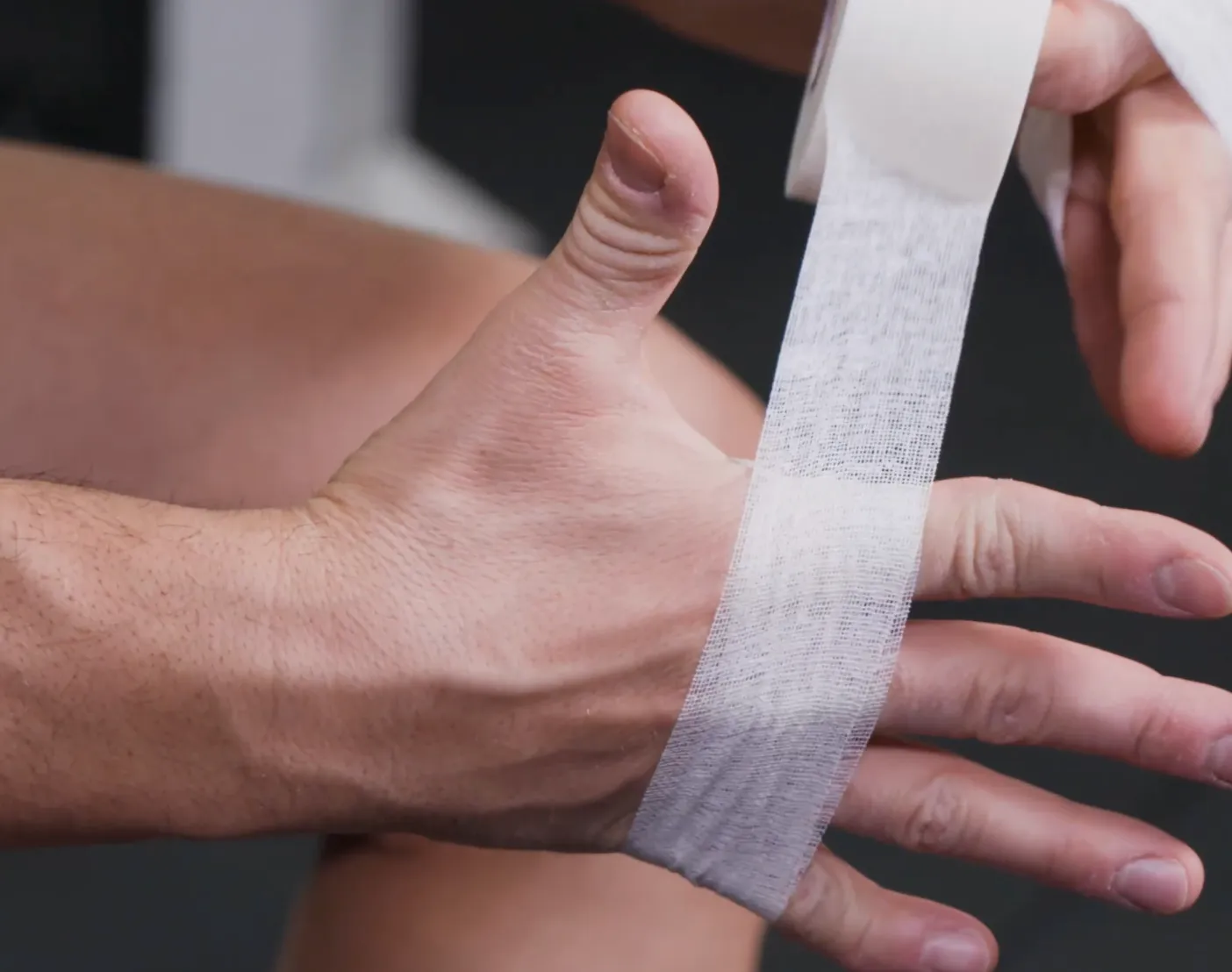
Buddy taping is the technique of taping an injured finger to an adjacent healthy finger for support. The healthy finger acts as a natural splint — stabilizing the joint while still allowing controlled bending, gripping, and everyday hand use. It is the standard first-line treatment for jammed fingers, mild sprains, and post-splint rehabilitation.
A jammed finger is one of the most common hand injuries in sports and daily life. You catch a basketball wrong, bend a finger back pulling on a stuck drawer, or take a hit during practice. The joint swells, movement hurts, and you're left wondering: do I need a splint, or can I just tape it?
For mild to moderate jammed fingers and sprains, the answer is usually buddy taping. The injured finger gets lateral support from its neighbor, and you keep enough range of motion to grip, type, drive, and function through recovery.
That's the fundamental difference between buddy taping and a rigid splint. A splint immobilizes the joint completely — necessary for fractures and severe injuries. Buddy taping stabilizes the joint while preserving movement — appropriate for jammed fingers, mild sprains, and post-splint rehabilitation when your doctor clears partial motion.
But there's a problem most guides don't mention: the tape itself. Standard adhesive tape bonds to skin. On a swollen, tender finger that needs daily tape changes for weeks, adhesive removal becomes its own injury. Every tape change pulls on inflamed skin, tugs hair, and leaves residue that's nearly impossible to clean off puffy joints. Buddy taping with adhesive tape works mechanically — but the daily removal ritual ranges from unpleasant to agonizing.