Protect — Weightlifting

Your PR Shouldn't
Depend on Whether
Your Callus Holds.

Guard-Tex protects calluses without killing bar feel. Survives chalk, hook grip, and heavy singles. Zero adhesive means zero pain when you unwrap — even over torn skin.

Scroll

Calluses Protect Your Hands. Until They Don't.

Every lifter builds calluses — they're your body's natural grip surface, toughened skin that forms where the bar meets flesh. The problem starts when calluses get too thick, too rigid, or too dry. The hardened skin catches on the knurling instead of rolling with it. The callus separates from the soft tissue underneath. You get a tear — and now you're choosing between training through a raw wound or losing a week of pulling.

The standard fixes all compromise your lifting. Straps eliminate the callus problem but also eliminate your grip development — and they're banned in powerlifting competition. Gloves add bulk that changes bar diameter, deadens feedback, and earns you looks in any serious gym. Athletic tape uses adhesive that fails under chalk, peels off mid-set, and rips at the wound when you remove it.

The real solution protects the callus surface — absorbing the shear force that causes tears — while keeping your hands in direct contact with the bar through thin, flexible material that holds chalk better than your own skin.

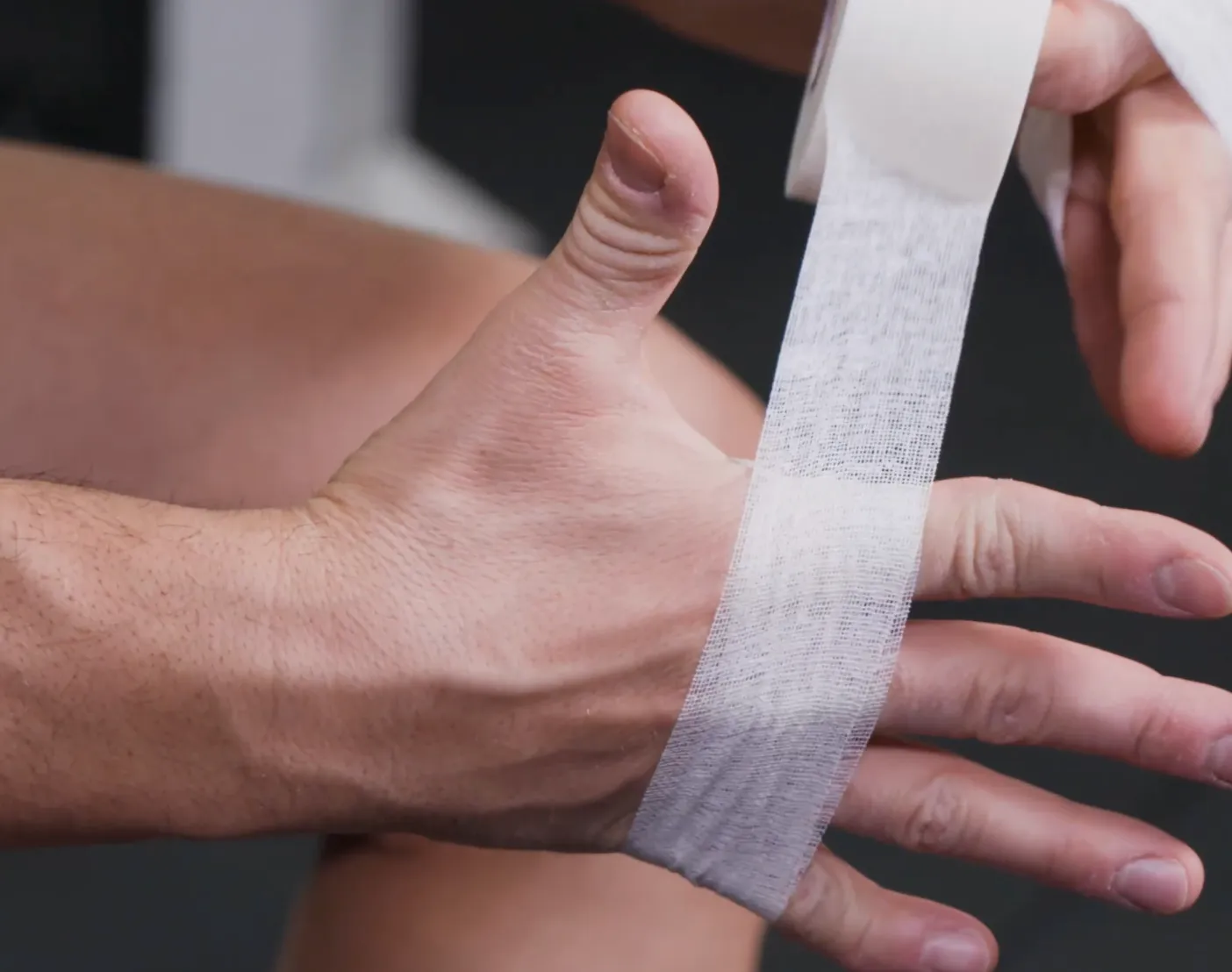
Hands wrapped with Guard-Tex for weightlifting

Self-Adhering Gauze

Chalk sticks to it. Adhesive doesn't touch you.

Guard-Tex's gauze fibers trap chalk particles — creating more consistent friction than bare skin. The tape bonds only to itself, so removal is painless. No adhesive residue on your skin. No fibers stuck to torn calluses. No reason to dread unwrapping after a heavy session.

Prevention, Protection, and Recovery in One Roll

Before heavy pulling. Wrap your callus ridge — the meaty pad at the base of fingers 2, 3, and 4 — with 2–3 layers before deadlifts, rows, or any high-rep barbell work. The gauze absorbs the shear force between the callus and the bar's knurling. You still feel the bar. You still hold chalk. The callus just stops catching and tearing.

Over a fresh tear. You ripped. Wrap Guard-Tex over the wound — it won't touch the raw skin because there's no adhesive. The tape bridges over the tear and bonds to itself on either side. Chalk up and finish your session. The wound stays clean and protected underneath.

During recovery. Keep a wrap on torn hands between sessions. Guard-Tex protects the wound from daily friction — steering wheels, keyboards, handshakes — while letting it breathe and heal. Change the wrap daily. Each removal is painless because nothing sticks to the healing tissue.

"I pull over 600 in competition. Guard-Tex is the only tape I trust on heavy singles — it holds chalk, stays on through a max attempt, and doesn't change how the bar sits in my hand."
— Jake H., competitive powerlifter, 275 lb class, Ohio
0
Adhesive Contact
5M+
Rolls Shipped
0
Residue Left
100%
Made in USA

Guard-Tex vs. Everything Else at the Platform

Guard-TexAthletic TapeLifting GlovesLifting Straps
Bar feel preserved Thin gauzeSomewhat BulkyAltered
Holds chalk Better than skin Adhesive failsN/A
Safe over torn skin No adhesive Sticks to woundRubs on woundN/A
Hook grip compatibleMarginalN/A
Removal painZeroPulls hair/skinN/AN/A
Competition legalCheck federationUsually yesUsually noUsually no
Grip development MaintainedReduced Eliminated
Cost per month~$8$12–20$20–40$15–30

How to Tape Your Hands for Lifting

Two minutes before your working sets. One roll. Tears by hand — no scissors.

1

Find Your Callus Ridge

Look at your palms. The thickest calluses form at the base of fingers 2, 3, and 4 — where the bar's knurling presses during deadlifts, rows, and pull-ups. Those ridges are where tears start. That's where you tape.

2

Wrap 2–3 Layers

Tear a strip and wrap around the affected fingers, overlapping each pass by half. Two layers for prevention, three if you're covering an existing tear. Snug but not tight — you need full range of motion for hook grip, mixed grip, or double overhand.

Wrap individual fingers, not the whole palm. Less material means more bar feel.
3

Chalk Over the Tape

Apply chalk directly onto the Guard-Tex. The gauze fibers trap chalk particles better than bare skin. Your grip actually improves — more consistent friction across the entire contact surface.

4

Lift. Then Unwrap Clean.

After your session, peel it off. No adhesive residue. No fibers stuck to wounds. No ripping hair off your hands. The skin underneath — whether intact or healing from a tear — is clean and undisturbed.

Black Guard-Tex

Gym Bag Essential

Black Guard-Tex — 3/4" × 30 yards

One roll lasts roughly a month of daily lifting. Thin enough to preserve bar feel on heavy singles. The same tape trusted by machinists and surgeons since 1935.

Shop Now

What Lifters Are Saying

"I've tried every tape. Athletic tape peels off under chalk. Medical tape sticks to my calluses. Guard-Tex is the only thing that stays on through a heavy session and comes off without pulling skin."
— Mike D., powerlifter, 198 lb class, Texas
"Olympic lifting with hook grip — this tape is perfect. Thin enough that the thumb wraps properly, tacky enough that the bar doesn't slip. I tape my thumbs before every snatch session now."
— Sarah L., Olympic weightlifter, Colorado Springs
"Tore a callus mid-session on my third set of deadlifts. Wrapped Guard-Tex over it and finished all five sets. No pain during the lift, no pain removing the tape. Healed in three days."
— Andre P., strength coach, Philadelphia
"I keep a roll at the gym and one at home. The gym roll protects during training. The home roll covers tears so door handles and dish soap don't ruin my recovery."
— Jessica M., recreational lifter, Nashville

Beyond the Platform

Lifters who discover Guard-Tex for the barbell find it solves hand problems everywhere else. It's the same tape CrossFit athletes use for pull-up rips and rock climbers use for finger crimps — identical shear-force problem, different surface. Wrap rowing machine handles for cardio sessions that used to blister your already-torn hands. Off the gym floor, it protects fingers during tool use, adds handlebar padding on bikes, and covers blisters inside shoes without the bulk of moleskin.

Frequently Asked Questions

Does Guard-Tex affect hook grip?

+

Most lifters report it improves hook grip. The gauze texture provides additional friction, and the thin profile preserves the thumb-over-finger lock. Significantly thinner than athletic tape — minimal bar diameter change.

Will it last through a heavy deadlift session?

+

Yes. Guard-Tex bonds to itself through cohesive technology — chalk and sweat don't break the bond. Lifters report it lasting through full sessions including heavy singles, rep work, and accessories without rewrapping.

Can I wrap over a callus tear?

+

Yes — one of its best uses. Zero adhesive means the tape doesn't touch the wound. Wrap 2–3 layers over the tear, chalk up, and continue. The wound stays clean underneath. Removal is painless.

How is it different from athletic tape?

+

Athletic tape uses adhesive that fails under chalk, pulls hair and skin at removal, and sticks painfully to torn calluses. Guard-Tex bonds only to itself, holds chalk better than skin, and removes without touching the wound. It's also thinner — preserving bar feel.

Is it legal in powerlifting competition?

+

Equipment rules vary by federation. Guard-Tex is used as finger and palm protection — similar to permitted tape and bandages in most federations. Always check your specific rulebook before competition.

What width is best for lifting?

+

The 3/4-inch width is ideal — wide enough to cover the callus ridge, narrow enough for individual finger wraps. Full coverage of the tear zone without unnecessary bulk.

Shop

Get Guard-Tex

Protect the Calluses. Hit the PR.

Wraps anything. Sticks to nothing. American made since 1935.

Shop Guard-Tex