You know the tradeoff. Gloves protect your hands but you can't feel anything. Bare hands give you dexterity but take constant damage.
Most people choose bare hands and accept the damage. Cuts, calluses, cracks, and raw spots become part of the job.
There's a middle option that most people don't know about.
Why Gloves Don't Work for Skilled Work
Gloves are designed for gross motor tasks. Moving materials. Operating equipment. Jobs where you grip and lift but don't need precision.
Skilled trade work is different:
You need to feel torque. Over-tighten a fastener and you strip threads or crack housings. That feel comes through your fingertips.
You work in tight spaces. Gloves add bulk. Bulk means you can't reach where you need to reach.
You handle small parts. Screws, connectors, fittings, fasteners. Try threading a wire nut wearing leather gloves.
You need feedback. Is that fitting seated? Is that connection tight? Is something binding? Your bare fingers know. Gloved fingers guess.
So the gloves come off. And your hands pay for it.
The Damage Adds Up
One bad day won't end your career. But trade work isn't one day—it's decades.
Calluses crack. The tough skin you build splits open in cold weather, dry conditions, or just from overuse. Cracks are painful and slow to heal.
Cuts compound. A cut on a knuckle takes a week to heal because you flex it open constantly. Before it heals, you add another cut. Then another.
Scar tissue accumulates. Each healed wound leaves less flexible tissue. After twenty years, your hands don't move like they used to.
Nerves get damaged. Repeated trauma dulls sensation. The fingertip sensitivity you rely on decreases over time.
This isn't dramatic injury. It's slow erosion. The cost comes due at the end of your career when your hands don't work right anymore.
The Middle Option: Targeted Protection
Instead of covering your entire hand, protect only the spots taking damage.
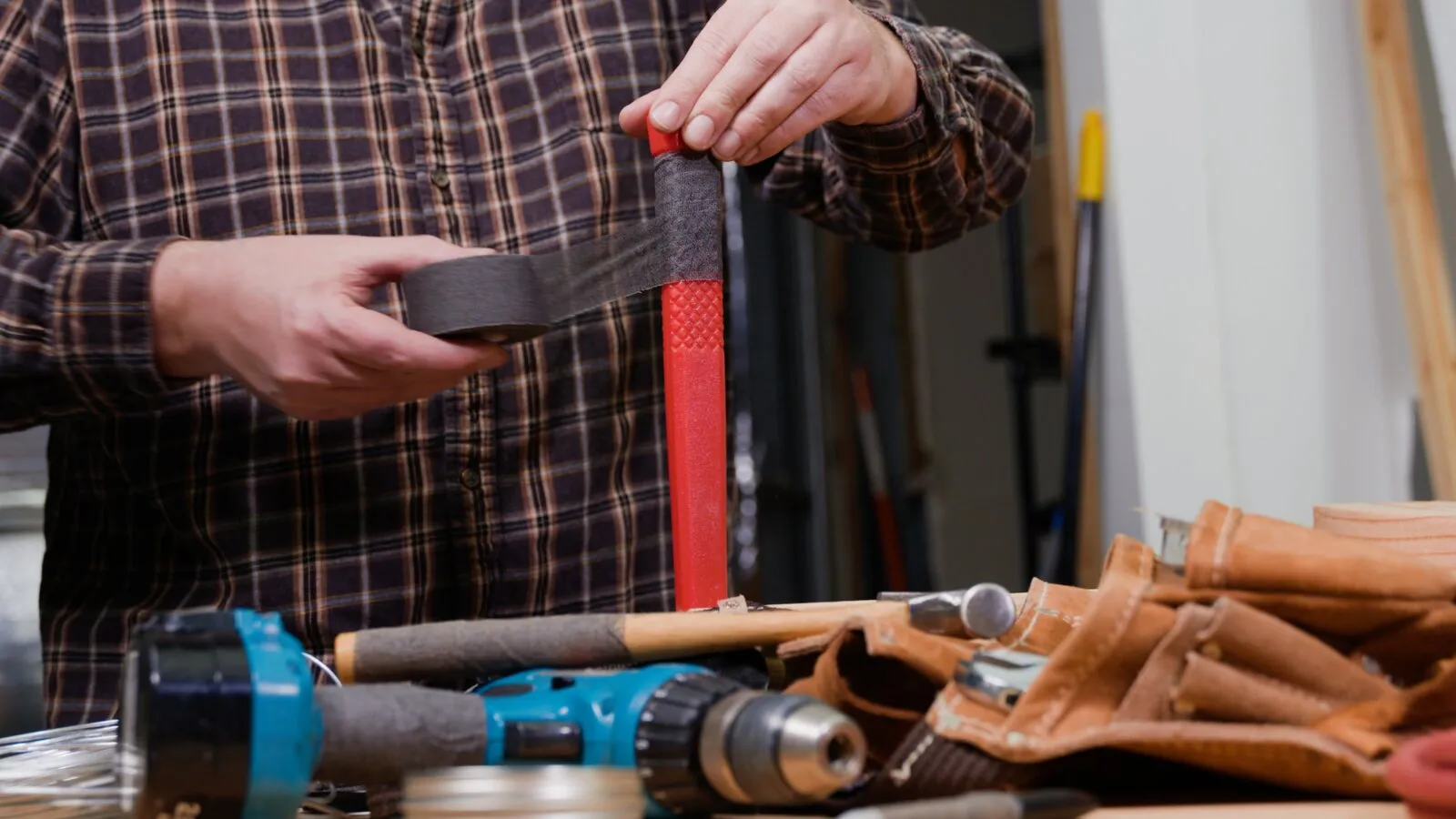
Self-adhering tape wraps around fingers, across knuckles, or over your palm. It sticks to itself, not your skin. The areas you wrap are protected. The areas you leave bare keep full dexterity.
What self-adhering tape does:
- Creates a thin cotton barrier between your skin and the hazard
- Absorbs friction that would otherwise cause calluses and blisters
- Prevents small cuts from reaching your skin
- Stays in place during work without adhesive on your skin
- Removes clean at the end of the day
What it doesn't do:
- Kill your dexterity like gloves
- Leave sticky residue like athletic tape
- Fall off after an hour like band-aids
- Make your hands sweat like rubber gloves
How to Identify Your Wrap Points
Look at your hands at the end of a work day. Where are the calluses forming? Where are the cuts? Where does it hurt?
Those are your wrap points.
Common patterns by trade:
| Trade | Typical Wrap Points |
|---|---|
| Electrician | Index finger, thumb, palm for wire work |
| Plumber | Thumb pad, knuckles for pipe and fittings |
| HVAC | Knuckle backs, forearms for sheet metal |
| Mechanic | Knuckles for wrenching, fingertips for parts |
| Carpenter | Palm base, fingers for repetitive tool use |
| Welder | Back of hands, forearms for spatter and heat |
Your pattern might be different. The point is to protect where you actually take damage, not everywhere.
How to Wrap
Basic finger wrap
- Tear a 6-8 inch piece from the roll
- Start at the base of the finger
- Spiral toward the tip, overlapping each pass by half
- Tear and press the end flat—it sticks to itself
Palm wrap
- Anchor the tape at the base of your index finger
- Wrap across your palm to the base of your pinky
- Overlap back toward the index finger
- Add a pass around the back of your hand to lock it
Knuckle wrap
- Wrap across the back of your hand covering all four knuckles
- Pass between index and middle finger to anchor
- Add a second pass for more protection
No scissors needed. The tape tears clean by hand in any direction.
FAQ
How thick is the tape?
Single layer is about 1mm. Thin enough to maintain sensation, thick enough to protect.
Can I wear it all day?
Yes. It breathes. Cotton gauze lets air and moisture through. No sweaty, macerated skin underneath.
How is it different from athletic tape?
Athletic tape uses adhesive that bonds to your skin. Self-adhering tape bonds only to itself. No residue, no pulled hair, no sticky mess at the end of the day.
Will it slip during work?
No. The layers bond to each other mechanically. Sweat, water, and oil don't affect it.
How long does a roll last?
30 yards. Most people get several weeks of daily use from one roll.
What if I need more protection in one spot?
Add more layers. One layer for light protection, two or three for heavier work. You control it.
Does it affect grip strength?
No. Cotton surface actually grips better than sweaty bare skin in many situations.