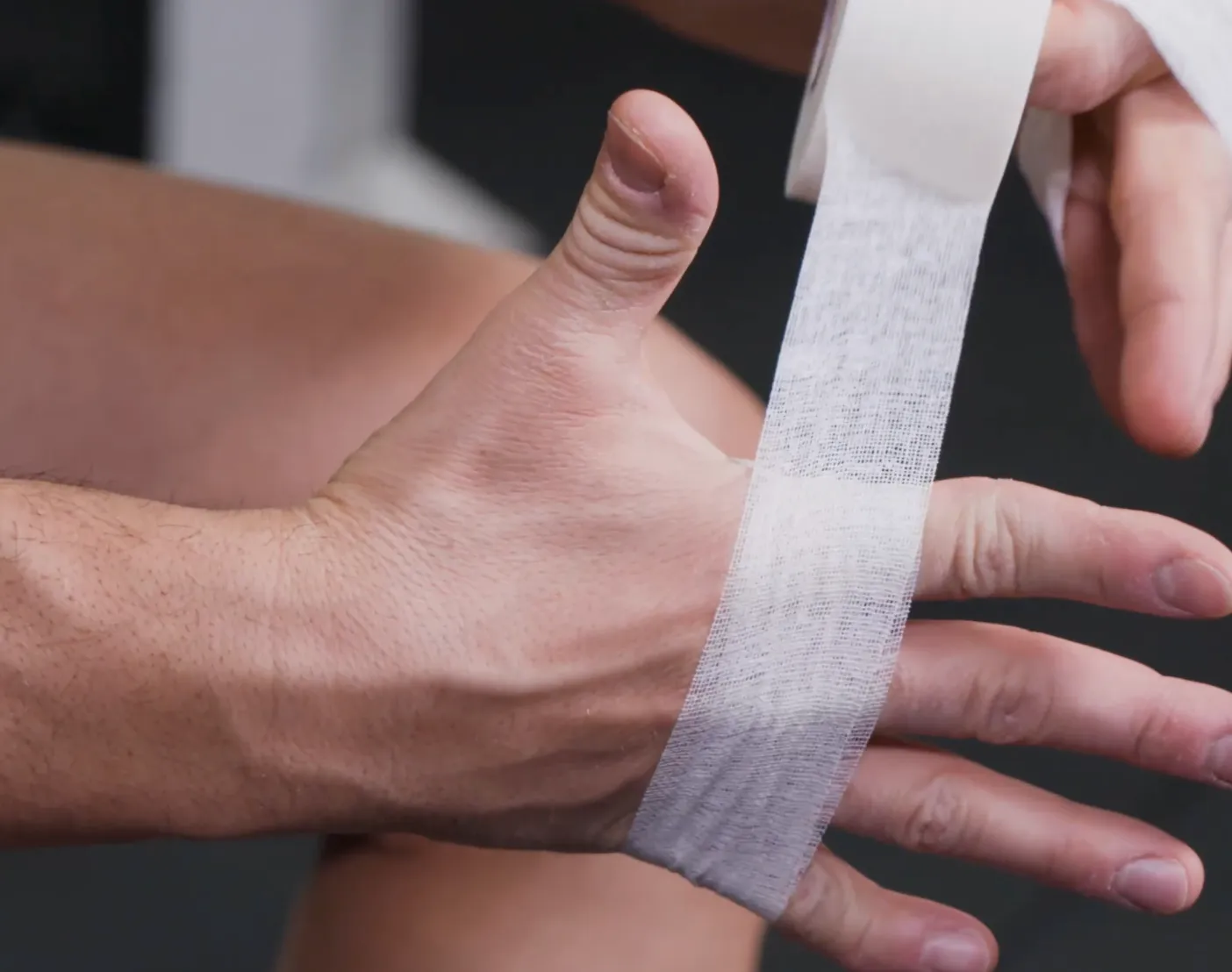
Zero Adhesive on Wounds
Covers blisters without bonding to them.
Guard-Tex sits over blister tissue with zero adhesive contact. Removal doesn't reopen the wound. Critical for blisters that need daily re-taping.
Blister Prevention
Guard-Tex prevents blisters by absorbing friction before it reaches skin — and protects healing blisters without adhesive that tears them open on removal. The only blister tape that solves both problems.
Blisters form from friction — repetitive rubbing that separates skin layers and fills the gap with fluid. The standard response is adhesive tape or adhesive bandages over the blister. This creates a second problem: the adhesive bonds to the damaged skin surface. When you remove it, the adhesive tears the blister roof, reopens the wound, and exposes raw tissue. Every tape change delays healing.
Moleskin, blister-specific adhesive patches, and hydrocolloid bandages all share this flaw — they use adhesive to stay on. Adhesive on healthy skin is mildly irritating. Adhesive on blister tissue is destructive. And for prevention, adhesive tape often causes more friction than it prevents because the tape edge creates a new rubbing surface.
My heel blisters from running were a weekly event. Removing the Band-Aid after a run was almost as bad as the blister. Guard-Tex comes off without touching the wound. My blisters actually heal between runs now.— Marathon Runner
Guard-Tex is self-adhering cotton gauze — it bonds to itself, not to skin. For prevention, cotton absorbs friction before it reaches skin. For treatment, cotton covers the blister without adhesive bonding to the wound. Removal is painless because nothing was ever bonded to your skin. Prevention and treatment with the same tape, the same mechanism, zero adhesive damage.
Zero Adhesive on Wounds
Guard-Tex sits over blister tissue with zero adhesive contact. Removal doesn't reopen the wound. Critical for blisters that need daily re-taping.
Blister prevention — hands. Wrap friction zones (palm, fingertips, thumb pad) before the activity that causes blisters. Cotton absorbs the friction that would otherwise separate skin layers. Common for golf, tennis, baseball, rowing, CrossFit, and manual work.
Blister prevention — feet. Wrap hot spots (heel, ball of foot, toes) before running, hiking, or long walking. Cotton manages the shoe-to-skin friction that creates foot blisters.
Active blister protection. Cover an existing blister with Guard-Tex for continued activity. The cotton cushions the blister against further contact while zero adhesive bonds to the wound surface. Remove and re-tape without reopening the blister.
Post-blister healing. Between activities, Guard-Tex over a healing blister protects the wound from accidental contact while allowing air circulation through the breathable cotton. Zero adhesive means every tape change leaves the healing surface undisturbed.
Every activity creates blisters in specific, predictable places. The friction patterns are different, the tape widths are different, and the conditions the tape needs to survive are different. Knowing your blister map means taping right the first time.
Blisters form where the club handle rotates against skin during the swing. The lead hand takes the worst of it — the base of the index finger, the pad below the pinky, and the inner thumb. The trail hand blisters at the ring and middle finger pads. Most golfers blister more on the first few rounds of the season before calluses rebuild, and again during multi-round days or tournament play. The 3/4-inch width wraps individual fingers without adding bulk inside the glove. Two passes per finger. Three on the thumb if you're playing 36 holes.
Oar rotation blisters hit the finger creases between the first and second joints, the pinky and index finger where lateral pressure peaks during the drive, and the palm pad where the handle transfers power. Water makes everything worse — adhesive tape dissolves, skin softens and tears faster, and blisters that would take days to form on dry land form in a single practice. Guard-Tex survives water because there is no adhesive to dissolve. Squeeze out absorbed water at the catch and the bond restores.
Barbell knurling and pull-up bar friction concentrate at the callus line across the base of the fingers. When a callus tears — the hand rip — the flap of dead skin peels back exposing raw dermis underneath. Athletic tape over a rip bonds to the raw tissue and reopens the wound on removal. Guard-Tex wraps over the rip without bonding to it. Chalk goes on top of the tape. The tape survives a full WOD.
Foot blisters follow the shoe — heel blisters from heel slip, ball-of-foot blisters from forefoot pressure, toe blisters from cramped toe boxes or downhill descents. The 1-1/2-inch width covers heel and ball zones efficiently. For toes, the 3/4-inch width wraps individually. Apply over a thin liner sock for maximum friction management. The breathable cotton prevents the moisture trap that makes foot blisters worse in non-breathable bandages.
Repetitive tool use creates friction blisters on the palm and fingers — shovel handles, wrenches, wire pulling, hammer grips. These blisters form over shifts, not minutes, so the tape needs to last 8-10 hours. Guard-Tex holds through a full shift and removes clean at the end. For work applications, pre-wrap known friction zones before the shift starts rather than waiting for hot spots to appear.
| Feature | Guard-Tex | Athletic Tape | Bare Skin | Adhesive Bandages |
|---|---|---|---|---|
| Adhesive on blister | ✓ Zero — never bonds to wound | ✗ Bonds to wound tissue | N/A | ✗ Adhesive on wound edge |
| Removal pain | ✓ Painless — always | ✗ Painful — tears blister roof | N/A | ✗ Pulls at wound edges |
| Friction prevention | ✓ Cotton absorbs friction | ✗ Tape edge creates new friction | N/A | Minimal |
| Breathability | ✓ Cotton gauze breathes | ✗ Occlusive — traps moisture | ✓ Open | Varies |
| Re-taping safety | ✓ Daily changes — zero wound damage | ✗ Each change tears healing tissue | N/A | ✗ Each change risks damage |
Know where you blister — the same spots every time. Heel, ball of foot, palm, fingertips, or wherever your activity creates repetitive friction.
Pro tip: Hot spots (red, tender skin before a blister forms) are your early warning. Tape these zones before the blister develops.Two passes of Guard-Tex over each friction zone. Apply to clean, dry skin. The tape bonds to itself as you wrap.
Pro tip: For foot blisters, apply over thin liner socks for extra friction management. For hand blisters, apply directly to skin.Guard-Tex holds through the activity — running, hiking, gripping, pulling. Cotton absorbs the friction throughout.
Pro tip: For multi-hour activities, check tape at breaks and add a pass if wear shows on high-friction zones.Peel off — zero pain, zero wound damage. If a blister formed despite taping, re-tape for the next session with an extra pass.
Pro tip: If blisters keep forming in the same spot with two passes, add a third. Layer thickness matches friction intensity.
Try Guard-Tex
Self-adhering cotton gauze. No adhesive on skin. Zero residue. One roll lasts weeks. Made in Elk Grove Village, IL since 1935.
Shop Now"My heel blisters from running were a weekly event. Removing the Band-Aid after a run was almost as bad as the blister. Guard-Tex comes off without touching the wound. My blisters actually heal between runs now."— Marathon Runner
"Golf blisters on my grip hand — every round. Guard-Tex before the round prevents them. And when I do blister, the tape comes off without ripping the skin open."— Weekend Golfer
"CrossFit — bar work blisters on my palms. Adhesive tape removal was reopening them every night. Guard-Tex protects during the workout and removes clean. Recovery time cut in half."— CrossFit Athlete
"Hiking the AT — blisters on day 2. Guard-Tex on my heels for the remaining 2,000 miles. Prevention and protection with the same tape."— Thru-Hiker
Self-adhering tape like Guard-Tex prevents blisters and protects healing blisters without adhesive that tears wound tissue on removal.
Guard-Tex does not. It bonds to itself, not to skin or wounds. Adhesive tape and bandages do bond to blister tissue, causing damage on removal.
Wrap friction zones with Guard-Tex before the activity. Cotton absorbs repetitive friction before it separates skin layers.
Yes. Guard-Tex covers blisters without adhesive contact on the wound. Remove and re-tape daily without reopening the blister.
For adhesive-free protection, yes. Moleskin uses adhesive that bonds to blister tissue. Guard-Tex uses zero adhesive.
Change daily or before each activity. Guard-Tex removal is painless, so frequent changes don't compound wound damage.
3/4" for finger and toe blisters. 1-1/2" for heel and palm blisters. Both available in the shop.
Self-adhering tape. No adhesive. No residue. Made in Elk Grove Village, IL since 1935.
Shop Guard-Tex
