Protect — Construction

Concrete Burns.
Splinters. Rebar.
Your Hands Take It All.

Guard-Tex wraps your fingers with woven cotton tape that blocks abrasion, absorbs impact, and stays on through a 10-hour pour. No adhesive on skin. No gloves stealing your grip. Just protection that works the way construction workers actually work.

Scroll

Gloves Come Off by 9 AM. Then What?

Every GC and every foreman knows the reality: gloves are off by mid-morning. You can't feel rebar tie wire through leather. You can't set a nail through rubber. You can't thread a nut in a tight corner with work gloves on. So the gloves come off and the damage starts — concrete alkalinity eating into cracked knuckles, lumber splinters embedding under fingernails, metal edge cuts on flashing and ductwork, and the slow abrasion of handling thousands of pounds of material every shift.

OSHA requires hand protection on construction sites. But OSHA doesn't require gloves specifically — it requires appropriate hand protection for the hazard. For the majority of construction tasks that demand dexterity, finger tape is the appropriate protection. It shields the specific contact points taking damage while leaving the rest of your hand free to work.

Switched my whole crew to Guard-Tex after one guy got a concrete burn infection that kept him out for two weeks. Now everyone tapes up before the first pour. Zero concrete burns since.
— Site Superintendent, Commercial Concrete

The alternative is what happens on most job sites: bare hands until they bleed, then adhesive bandages that fall off in sweat, then duct tape that rips skin when removed. Guard-Tex replaces that cycle with protection that actually stays, actually breathes, and actually comes off clean at the end of the day.

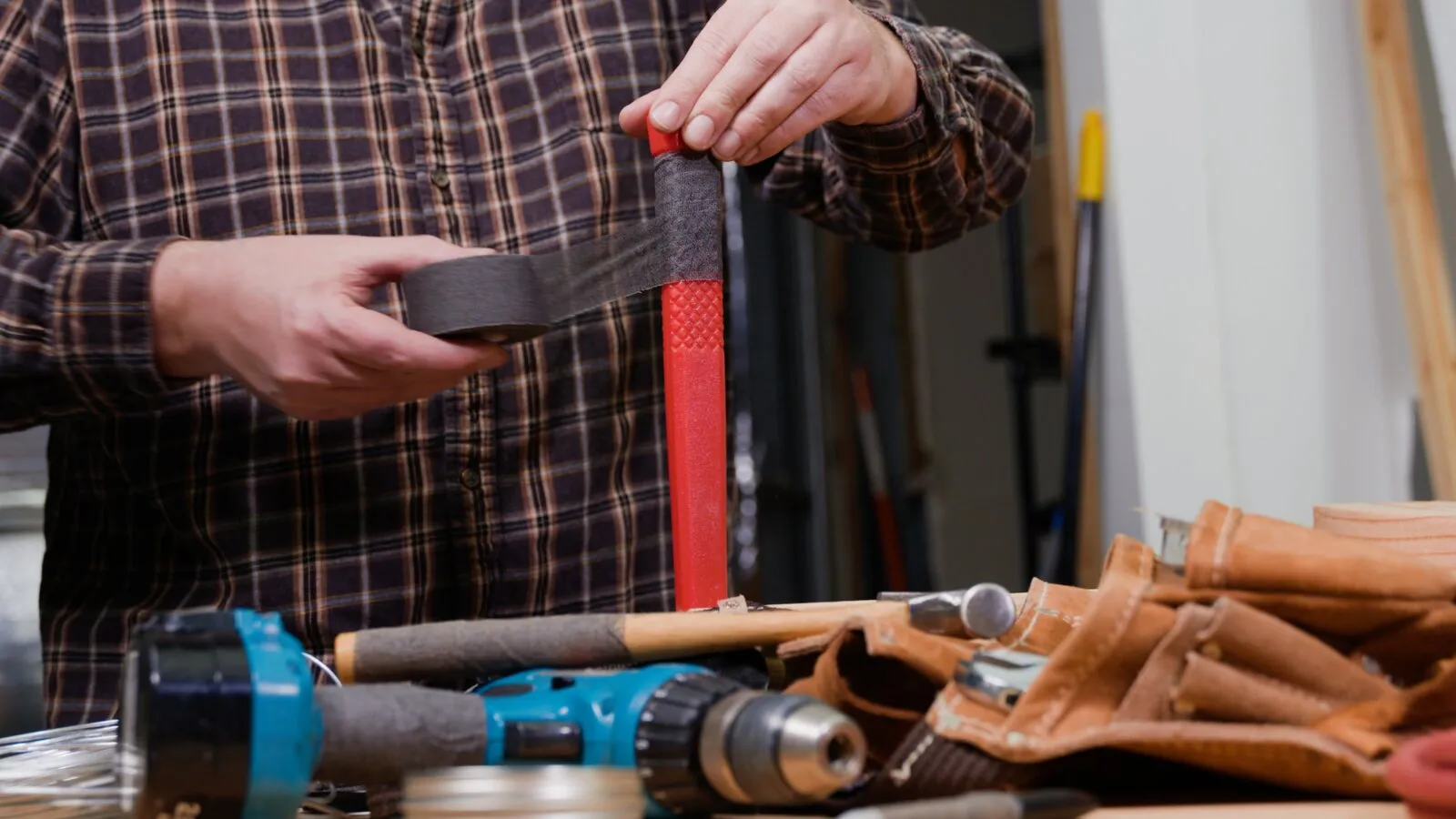
Construction using Guard-Tex self-adhering tape

Full Dexterity

Set nails. Tie wire. Feel the work.

Guard-Tex is a woven cotton gauze that wraps individual fingers. It's thin enough to feel a nail set and tough enough to block rebar rust and concrete splash. No adhesive means no residue on tools, no hair pulling, no sticky mess under work gloves when you do need them.

Protection by Task — Every Phase of Construction

Concrete work. Fresh concrete is alkaline — pH 12 or higher. Prolonged skin contact causes chemical burns that crack, split, and won't heal while you keep pouring. Guard-Tex on fingertips and knuckles creates a cotton barrier between your skin and wet concrete. It absorbs splash instead of letting it sit on skin. Finishers who hand-trowel flatwork wrap their entire working hand for full coverage.

Framing and carpentry. Splinters from framing lumber are a shift-long nuisance that becomes a career-long problem. PT boards, engineered lumber, and rough-sawn material all embed fibers under skin at high speed during handling. Guard-Tex on fingertips catches splinters before they reach skin. The woven cotton traps fibers instead of letting them penetrate. Framers also tape thumb pads to prevent hammer-strike bruising.

Rebar and metal work. Tie wire cuts. Rebar rust embeds in cracked skin. Sheet metal edges on flashing and ductwork slice fingertips. Guard-Tex adds enough abrasion resistance to prevent casual cuts while maintaining the tactile feedback needed for tie-wire twisting and metal bending. Two passes on each fingertip covers the damage zones.

Power tool grip. Vibration from grinders, sawzalls, and impact drivers causes hand fatigue and numbness over full shifts. Guard-Tex adds a thin cushion layer between skin and tool housing that dampens vibration transfer. It also prevents friction blisters from trigger guards and rotating handles during extended use.

General material handling. Lumber, drywall, steel studs, concrete block — construction is material handling. Every piece you grab, carry, stack, and cut contacts your fingers. Guard-Tex turns your hands into tools that can take the repetitive friction of handling thousands of pieces per day without accumulating damage.
0
Adhesive on Skin
100%
Cotton Gauze
Full
Dexterity
1935
Made in USA Since

Guard-Tex vs. What Construction Actually Use

FeatureGuard-TexWork GlovesBare HandsAdhesive Tape / Bandages
Dexterity✓ Full — feel nail sets, wire nuts✗ Reduced — thick material✗ None — bare skin✗ Sticky, loses grip
Concrete splash protection✓ Cotton absorbs, blocks pH✓ Blocks contact✗ Burns directly✗ Melts, traps chemical
Splinter resistance✓ Woven cotton traps fibers✓ Blocks penetration✗ Direct embedding✗ No protection
Stays on in sweat✓ Cohesive — grips tighter wetVariesN/A✗ Slides off in heat
Removal✓ Instant, cleanPull offN/A✗ Pulls skin and hair

How to Tape for Construction Work

1

Identify Your Damage Zones

Look at where your hands take the most punishment. For most trades it's fingertips, thumb pads, and the web between thumb and forefinger. Concrete finishers add knuckles. Framers add the hammer-hand palm. Start with the top three contact points.

Pro tip: If you're not sure where to tape, work bare-handed for one hour, then look for the red spots. Those are your damage zones.
2

Wrap Two to Three Passes

Tear a 4-6 inch strip and wrap the finger or thumb pad with overlapping passes. Guard-Tex bonds to itself — no clip, no tuck, no adhesive. Two passes for friction protection, three for heavy abrasion work like rebar or concrete finishing.

Pro tip: Wrap snug but not tight. You should be able to bend the joint fully. If the tape restricts movement, you've wrapped too tight.
3

Work a Full Shift

Guard-Tex holds through sweat, concrete splash, dust, and rain. The cohesive bond actually gets stronger with moisture and compression. One application lasts a full shift for most tasks. Concrete finishers may rewrap at lunch.

Pro tip: Keep a roll in your tool belt or gang box. A roll weighs less than an ounce and takes up less space than a tape measure.
4

Peel Off Clean

At end of shift, unwrap or tear off the tape. It releases instantly with zero residue on skin. No hair pulling. No adhesive gunk on your steering wheel driving home. Your skin underneath is clean, protected, and ready for tomorrow.

Pro tip: If you're wearing gloves over the tape for specific tasks (grinding, cutting), the tape prevents glove sweat from macerating your skin.
Black Guard-Tex

Best Seller for Trades

Guard-Tex Black — 3/4" Width

The go-to for tradespeople. Black hides jobsite dirt. 3/4" width wraps fingers perfectly. Self-adhering, non-stretch, woven cotton. One roll lasts 2-3 work weeks.

Shop Now   Wholesale Pricing

What Construction Are Saying

"Switched my whole crew to Guard-Tex after one guy got a concrete burn infection that kept him out for two weeks. Now everyone tapes up before the first pour. Zero concrete burns since."
— Site Superintendent, Commercial Concrete
"I'm a framing carpenter. Splinters were just part of the job until I started taping my index fingers and thumbs. Haven't pulled a splinter in three months."
— Journeyman Carpenter, Residential Framing
"Rebar tie wire used to slice my fingers open every other day. Two wraps of Guard-Tex on each fingertip and I haven't had a cut in the entire project."
— Ironworker, Bridge Construction
"I do concrete finishing by hand — trowel work, edging, brooming. My hands used to crack and bleed from the alkalinity. Guard-Tex keeps the concrete off my skin and I can still feel the trowel."
— Concrete Finisher, 22 years

Frequently Asked Questions

What hand protection do construction workers use besides gloves?

+

Self-adhering finger tape like Guard-Tex provides task-specific protection without sacrificing dexterity. It wraps individual fingers and contact points, blocking splinters, concrete burns, and abrasion while allowing workers to feel fasteners, wire, and tools. It satisfies OSHA hand protection requirements for tasks where gloves are impractical.

How do you prevent concrete burns on hands?

+

Fresh concrete has a pH above 12 and causes alkaline burns on prolonged skin contact. Guard-Tex wraps create a cotton barrier between skin and wet concrete. The woven gauze absorbs concrete splash instead of letting it sit on skin. Concrete finishers wrap all working fingers and knuckles before pouring.

Does finger tape stay on at a construction site?

+

Guard-Tex self-adhering tape bonds to itself through cohesive technology. It holds through sweat, dust, rain, and concrete splash — the bond actually strengthens with moisture and compression. One application typically lasts a full shift. No adhesive means it won't gum up or slide off.

Can you use duct tape to protect fingers on a job site?

+

Workers sometimes do, but duct tape uses aggressive adhesive that pulls hair and skin on removal, traps sweat causing maceration, and leaves sticky residue on tools and steering wheels. Guard-Tex is purpose-built for skin — no adhesive, breathable cotton, and clean removal after any shift.

Is finger tape OSHA-approved for construction?

+

OSHA requires appropriate hand protection for identified hazards (29 CFR 1926.95). For tasks requiring dexterity where gloves impair performance, finger tape provides targeted protection for specific contact points. Many safety directors approve self-adhering tape for dexterity-critical tasks as part of a comprehensive hand protection program.

How do apprentice construction workers protect their hands?

+

Apprentices benefit most from finger tape because their hands haven't developed calluses yet. Taping during the apprenticeship protects against blisters, splinters, and abrasion while calluses build naturally underneath. Many journeymen who started taping as apprentices continue throughout their careers.

Get Guard-Tex

Your Hands Have Another 20 Years of Work. Protect Them.

Self-adhering tape. No adhesive on skin. Made in Elk Grove Village, IL since 1935.

Shop Guard-Tex