Protect — Rowing
Guard-Tex stays on wet, cushions raw skin, and peels off painlessly over open blisters — because it bonds to itself, never to you. The boathouse tape that survives an entire practice and comes off like it was never there.
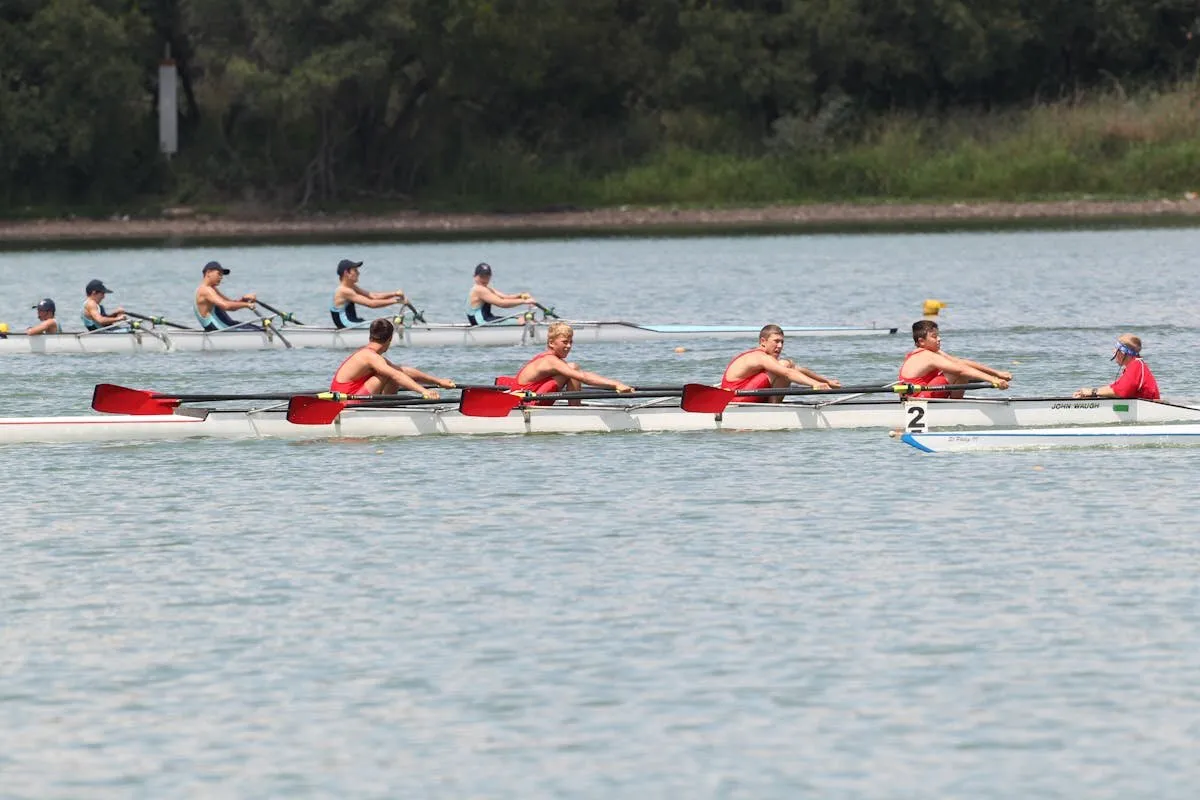
Rowing is a blister factory. The oar handle rotates against your fingers during every stroke — catch, drive, finish, recovery — hundreds of times per practice. The friction concentrates at the finger creases between the first and second joints, at the pinky and index finger where lateral pressure peaks during the drive, and across the palm pad where the handle transfers power from your legs through your hands and into the water.
Blisters form fast. In novice rowers, they form during the first week. In experienced rowers, they form every time conditions change — new oars, higher volume training blocks, early season when winter calluses have thinned, or race day when stroke rate jumps 6–8 beats above practice pace and every catch is harder than normal.
The problem isn't the blisters themselves. The problem is what happens when you try to tape them. Athletic tape uses adhesive that dissolves in water — it's designed for dry-field sports, not for hands that are constantly wet from oar splash and sweat. Within 20 minutes of water time, athletic tape is sliding, bunching, and trapping moisture against raw skin. When you peel it off after practice, the adhesive rips healing blister tissue and reopens the wound. You're worse off than if you'd rowed bare-handed.
Gloves seem logical but are banned in most competitive rowing for good reason — they eliminate the oar feel that separates precise blade work from washing out on the catch. Even in recreational rowing, gloves create a feedback dead zone that makes technique development nearly impossible.
What rowers actually need is a rowing tape for hands that stays on wet, comes off without ripping healing skin, and preserves enough oar feel to maintain stroke quality. That means a material with no adhesive — one that bonds to itself instead of to you.
Zero Adhesive
Guard-Tex bonds to itself, not to your skin. Wrap over raw blisters, row a full practice in spray and sweat, then peel it off and the blister underneath is exactly as you left it — protected, not torn open by adhesive. No ripping. No re-opening wounds. No flinching.
It survives water. Guard-Tex doesn't use adhesive, so there's nothing for water to dissolve. The tape bonds to itself through cohesive tension — wrap it, and the layers lock together whether your hands are dry, soaked with oar splash, or dripping with sweat in an August two-a-day. It may absorb some water during extended sessions, but squeeze it out and the bond restores. Athletic tape starts failing the moment it gets wet. Guard-Tex starts the same way it finishes.
It removes painlessly over raw skin. This is the feature that changes rowing hand care. Guard-Tex contains zero adhesive — it literally cannot stick to skin, blister fluid, or raw tissue. Wrap it over a torn blister before practice, row for 90 minutes, then peel it off and the wound underneath is untouched. No adhesive pulling on healing tissue. No reopening what your body spent the night trying to close. For rowers managing blisters through a multi-day regatta, this is the difference between rowing through and sitting out.
It preserves oar feel. Guard-Tex's gauze structure is thin enough to maintain tactile feedback from the oar handle through 2–3 layers of wrap. You can feel the catch. You can feel the handle seat in your fingers during the drive. You can feel blade angle at the finish. Athletic tape and especially gloves create a numbness that costs technique — Guard-Tex wraps thin enough that your hands still talk to the oar.
"I've been rowing for eleven years and tried every tape sold in a boathouse. Athletic tape comes off in the water. Medical tape rips my blisters open. Guard-Tex stays on through a full practice and comes off like I'm unwinding gauze. My blisters actually heal now instead of getting re-torn every day."— Sarah K., collegiate varsity, lightweight 8+, Massachusetts
| Guard-Tex | Athletic Tape | Medical Tape | Rowing Gloves | |
|---|---|---|---|---|
| Stays on wet | ✓ Bonds to itself | ✗ Adhesive dissolves | ✗ Loosens | ✓ |
| Painless blister removal | ✓ Zero adhesive | ✗ Rips skin | ✗ Rips skin | N/A |
| Oar feel preserved | ✓ Thin gauze | Moderate | Moderate | ✗ Dead zone |
| Competition legal | ✓ | ✓ | ✓ | ✗ Most regattas |
| Breathes wet | ✓ Gauze wicks | ✗ Traps moisture | ✗ Traps moisture | ✗ Traps moisture |
| Quick rewrap on water | ✓ 30 seconds | ✗ Need dry hands | ✗ | N/A |
| Wraps over open wounds | ✓ Won't bond to skin | ✗ Adhesive sticks | ✗ Adhesive sticks | Friction risk |
Five minutes in the boathouse. One roll. No scissors needed — tear by hand.
Check your fingers and palms. Existing blisters, hot spots, callus ridges that are about to tear — these are your wrap targets. Focus on the finger creases between the first and second joints, the pad below the index and middle fingers, and the inside edge of the pinky where it takes lateral drive pressure.
Start at the crease between the first and second finger joints — this is where the oar handle concentrates friction during the drive phase. Wrap 2–3 layers around each finger, overlapping by half on each pass. The tape bonds to itself on contact, so keep moderate tension as you wrap. Double-wrap the pinky and index finger — they absorb the most lateral force during the catch.
For palm blisters, use a figure-eight pattern: wrap around the base of the fingers, cross over the blister pad, and anchor at the wrist crease. This diagonal wrap stays put during the catch-to-drive transition better than straight horizontal wraps that slide when the oar handle rotates in your hand. Two layers provides cushion without killing feel.
Guard-Tex stays functional through full practices. During long sessions — 90+ minutes or multi-piece workouts — squeeze excess water from the tape between pieces. The self-adhering bond restores when compressed. If a wrap loosens at the halfway point, peel it, squeeze it out, and rewrap in 30 seconds on the water. No scissors, no adhesive, no dry hands required.

The Boathouse Roll
One roll lasts a full season of finger wraps. Beige blends with skin for a clean look on race day. The same tape trusted by athletic trainers and surgeons since 1935 — now protecting rowers' hands.
Shop Now"Spring training week two — the whole novice eight had blood on their oar handles. I brought Guard-Tex to the boathouse and by week three everyone was wrapping before practice. Blisters healed while we trained instead of getting torn open every morning."— Coach Anderson, women's novice, Pennsylvania
"I rowed through a three-day regatta with torn blisters on both hands. Guard-Tex over the open wounds before each race, peel it off after. The blisters never got worse. With athletic tape they would have been bleeding again by the second heat."— James W., men's varsity 4+, Washington
"The oar feel is the part that surprised me. I expected it to feel like taping oven mitts to my hands. But two layers of Guard-Tex and I can still feel the catch entry and blade angle through the handle. I actually row better taped than I do bare-handed when blisters are bad."— Rachel M., lightweight sculler, junior national team, California
"Our boathouse goes through a roll a week during spring season. Twenty rowers sharing one roll and it still lasts seven days. The cost per athlete is basically nothing compared to what we used to spend on athletic tape that fell off in the water."— Mike D., masters rower and boathouse manager, Boston
Rowers who discover Guard-Tex for blister protection find the same tape solves hand problems across every sport that punishes skin. It wraps CrossFit hands for pull-up bars and barbell work where the same catch-and-grip friction destroys palms. It protects kayak paddle hands in the same wet conditions that make rowing brutal. It cushions cycling handlebars during century rides where vibration and moisture combine. And the same painless-removal property that protects open rowing blisters works for fragile elderly skin and nurses' hands that crack from constant washing.
One roll in the boathouse. Another in the gym bag. Same product since 1935.
No. Guard-Tex bonds to itself through cohesive tension, not adhesive — so water can't dissolve the bond. It may absorb some water during extended sessions, but squeezing it out restores the grip. It stays functional through full practices, races, and multi-piece workouts in rain, splash, and sweat.
Yes — this is the primary reason rowers choose Guard-Tex. It contains zero adhesive, so it physically cannot bond to skin, blister fluid, or raw tissue. Wrap over open blisters, row a full practice, then peel it off and the wound underneath is untouched. No ripping, no re-opening, no flinching.
Two to three layers per finger for most rowers. Three to four on high-pressure zones like the pinky crease and index finger if blisters are severe. More layers add cushion but reduce oar feel slightly — most competitive rowers settle on 2–3 as the balance point between protection and sensitivity.
Yes. Finger and hand tape is universally permitted in competitive rowing — unlike gloves, which are banned at most regattas. Self-adhering tape is preferred because it maintains oar feel with no bulky material between your fingers and the handle.
The 3/4-inch width is ideal for finger wraps and palm protection on rowing hands. Wide enough for efficient wrapping, narrow enough to avoid bulk between fingers that changes oar grip. One roll lasts a full season for a single rower, or about a week for a boathouse sharing among a team.
Athletic tape uses adhesive designed for dry-field sports. In water, the adhesive dissolves, the tape slides, and removal rips healing skin. Guard-Tex uses zero adhesive — it stays on wet, breathes so hands don't macerate, and peels off painlessly over raw blisters. They're fundamentally different products built for fundamentally different environments.
The best tape for rowing blisters is a non-stretch self-adhering tape like Guard-Tex. It stays on through water and sweat, removes painlessly over raw blisters without reopening wounds, and preserves oar feel through 2–3 layers. Athletic tape fails wet and rips healing skin on removal. Vet wrap stretches and loosens under grip load. Guard-Tex does neither.
Wraps anything. Sticks to nothing. American made since 1935.
Shop Guard-Tex